

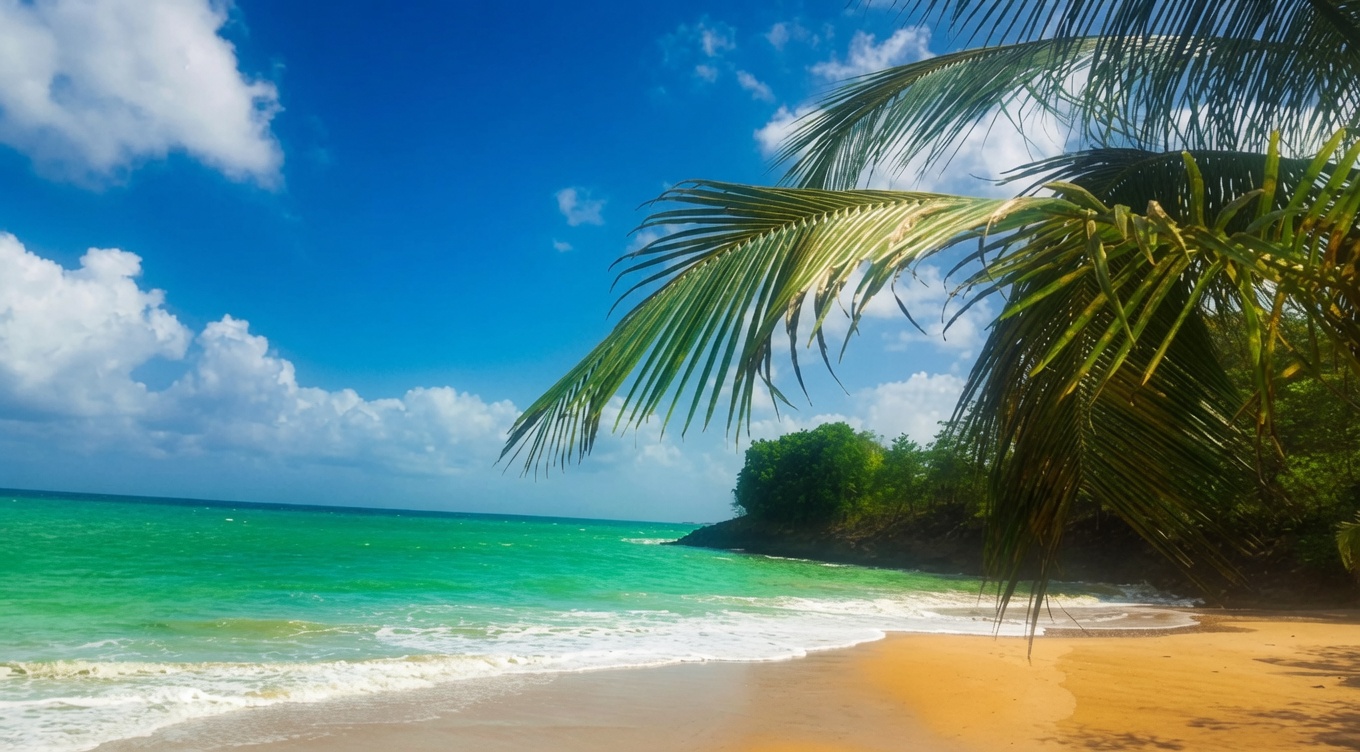
We don’t have winters here in Guadeloupe. It’s a small Caribbean island of almost 400,000 people, affectionately called “Gwada” by the locals. We have two distinct seasons: the dry Carême and the wet Hivernage. But no matter the month, we have sun all year round and beaches on every side.
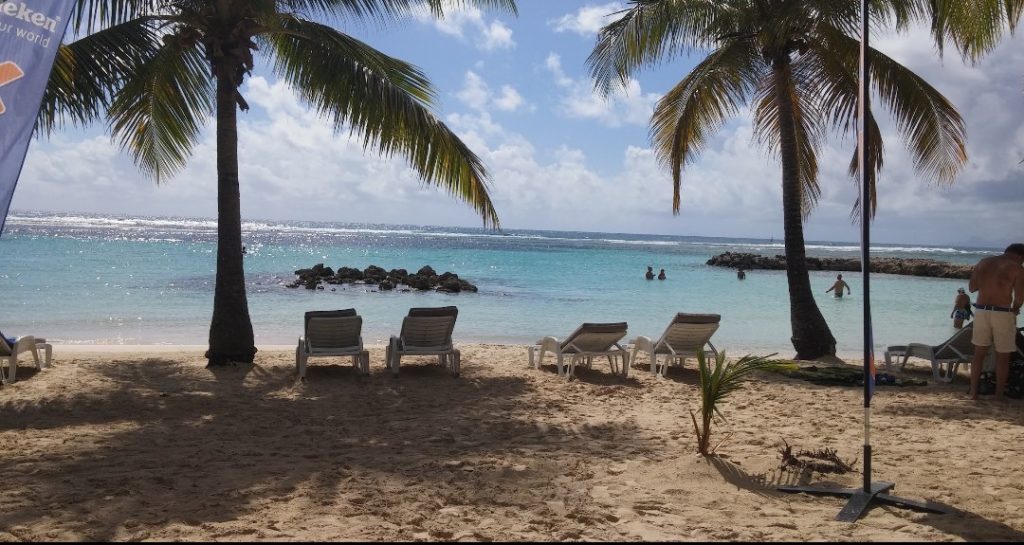
One of my favourite places here is the beaches. They vary in texture and shade, from the blinding, powdery white sands of Grande-Terre to the dramatic golden shores or the volcanic black coastline of Basse-Terre, all washed by an impossibly clear turquoise sea. Guadeloupe is an archipelago. A short boat trip can land you in the smaller Islands of Marie-Galante, La Désirade, or Les Saintes, all considered part of Guadeloupe.
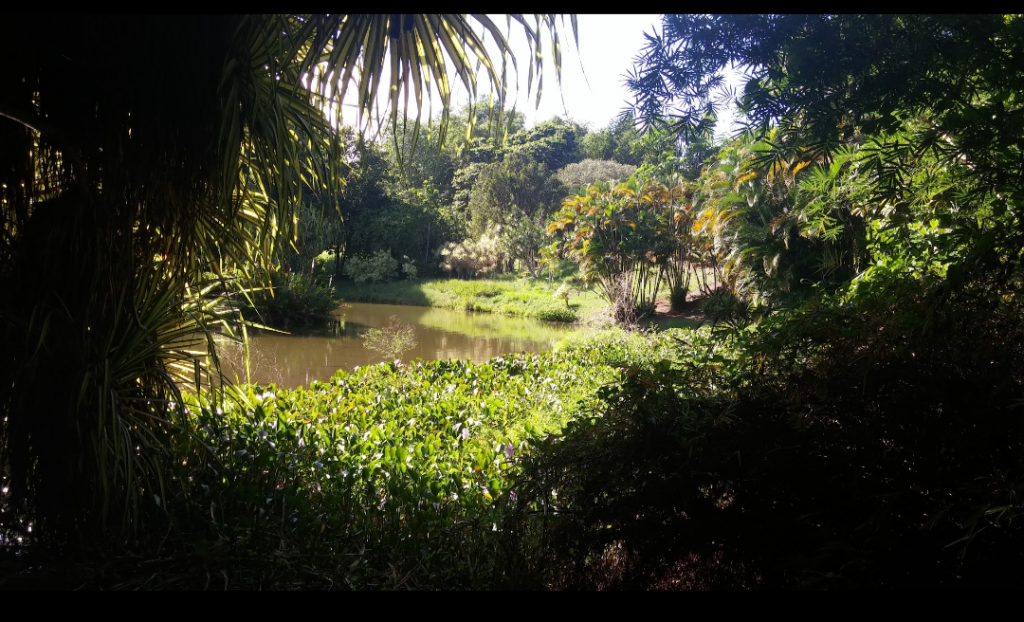
We have all sorts of landscapes for all tastes. Tired of beaches? Step inland and the scenery completely shifts. Rushing rivers, spectacular waterfalls, a sweeping mountain. There are places where you can walk for hours hearing nothing but birds and the occasional rustle of the undergrowth. You can stop and breathe in the scent of wet leaves, wild ginger, and fragrances only a tropical forest gives off. You can seek out the Sofaia water source, where a natural sulfurous spring feeds communal showers all day, all night, all year long, perfect for skin issues. A few museums are scattered about to ground you in our history, too.
But to me, the true heartbeat of this place is the music. I’m biased, of course. I grew up in it. We sit at a crossroads of worlds and languages. Walk down any street, step into any shop, and you’ll hear Latino music, Caribbean rhythms, American beats, and European melodies in constant collision. We also know how to throw a party. It’s practically a stigma we carry: people from mainland France constantly tease us for having more fun than sense.
There’s a saying here that translates as “better laugh than cry.” It’s a necessary philosophy, because we do have heavy problems to contend with. The cost of living runs significantly higher than on the French mainland, and while we are technically an overseas French department, in practice it often feels like we remain a colony. We face a steadily ageing population, a constant drain of youth and talent to France, and infrastructure that is often crumbling beneath our feet. So yes, we have become adept at masking pain with merriment.
If you’re thinking of visiting, be prepared for the heat. I remember chuckling when I lived in the UK, watching the British media compare its summer temperatures to the Caribbean. “Today it’s been hotter than in Jamaica!” they’d say. Maybe on paper. But it’s a completely different kind of heat, and I can attest to that. Thirty degrees Celsius here is far more oppressive than thirty degrees in other latitudes. It comes down to the angle at which the sun’s rays strike the atmosphere: the closer you are to the equator, the more direct the sunlight, with less atmosphere to diffuse its intensity. We do have a quasi constant breeze called “Les Alizés” that mitigate this. But do not overexpose yourself. Lying beneath the sun for hours is not a good idea, even with heavy protection. Far better to avoid it entirely during the hardest hours, roughly 11 AM to 3 PM.
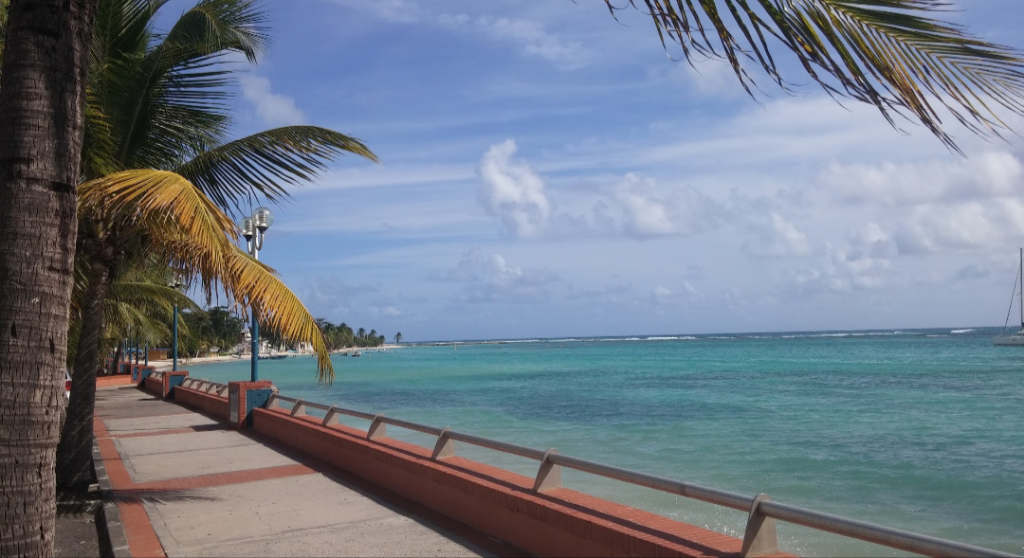
Anyway. There is a raw beauty here that I wonder if other writers have ever truly captured. The sky is different. Usually deeper, richer than anything I remember from the UK. And there’s something about that bright, crystalline morning light: white, not full or yellow. There is still so much natural beauty I need to sit with longer before I can describe it properly.
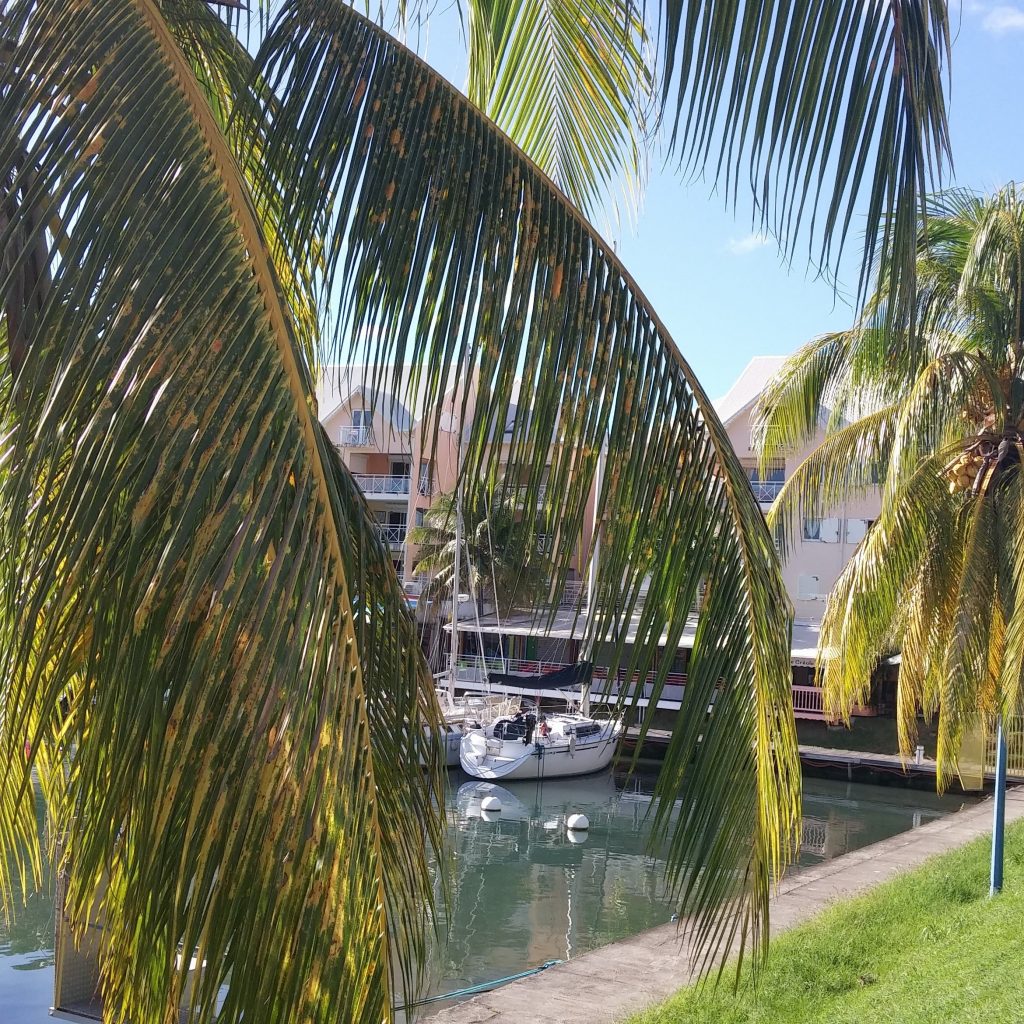
Perhaps the most interesting convergence of our blue waters, direct sun, and festive spirit happens every four years during the Route du Rhum. This is a transatlantic race that begins in the cold waters of Saint-Malo, France, and cuts across the vast, volatile Atlantic to finish right here in Pointe-à-Pitre, our capital. When those massive, multi-million dollar trimarans finally round the island, sails billowing against a deep blue sky, the entire archipelago erupts. The marinas transform into a weeks-long festival of music, food, and rum, drawing crowds from across the globe to witness something that feels like the ultimate triumph of human spirit over ocean. It is an international spectacle.
If you do decide to come, remember this is a French-speaking island, like Martinique or Haiti. English is taught in schools, but most people are not comfortable conversing in it. If you want to earn some genuine warmth, learn a few Guadeloupean Creole expressions. Most people speak it here (not all, depending on if they grew up here or on France)
If you walk into a room or join a queue, try:
“Bonjou tout moun” (French: “Bonjour tout le monde”): “Good morning, everyone.”
We have an interesting relationship with politeness, inherited in part from the French. Greet a room properly and you immediately rise several points in people’s estimation.
There are many ways to greet people here. This one works across the board, from casual acquaintances to close friends and family:
“Ka ou fè?” (pronounced a bit like Cow Fair): “How’s it going?”
Me, because I’m a bit of a troublemaker, I often go with:
“Kay ka fèt?” delivered with a mischievous grin. A warm, casual “What’s happening?”
To close: we try to reach beyond our shores. You might know Death in Paradise. Exclusively shot in Guadeloupe. Some of the gritty scenes of Savage Beauty (Bandi) on Netflix were provided by Guadeloupe too (as well as Martinique and French Guiana).
Did you know that in Japan, there is a vibrant subculture of reggae and dancehall fans, selectors, and dancers completely fascinated by the Caribbean, and by us in particular? They obsess over the music, the language, the style. It always surprises me, but also warms my heart, that this tiny, complicated, beautiful stepping-stone in the sea is echoing far beyond its borders.
Phew! That was a lot! Thanks for reading to the end; you are a trooper 😛
R.
P.S. This post was an idea from Long and Short Reviews, from their Wednesday Weekly Blogging Challenge. Check out what other bloggers said.
A little glimpse of my Guadeloupean-flavoured collaborations:


Leave a Reply