

The case for building your personal brand before you need it.
A book published before Google changed everything
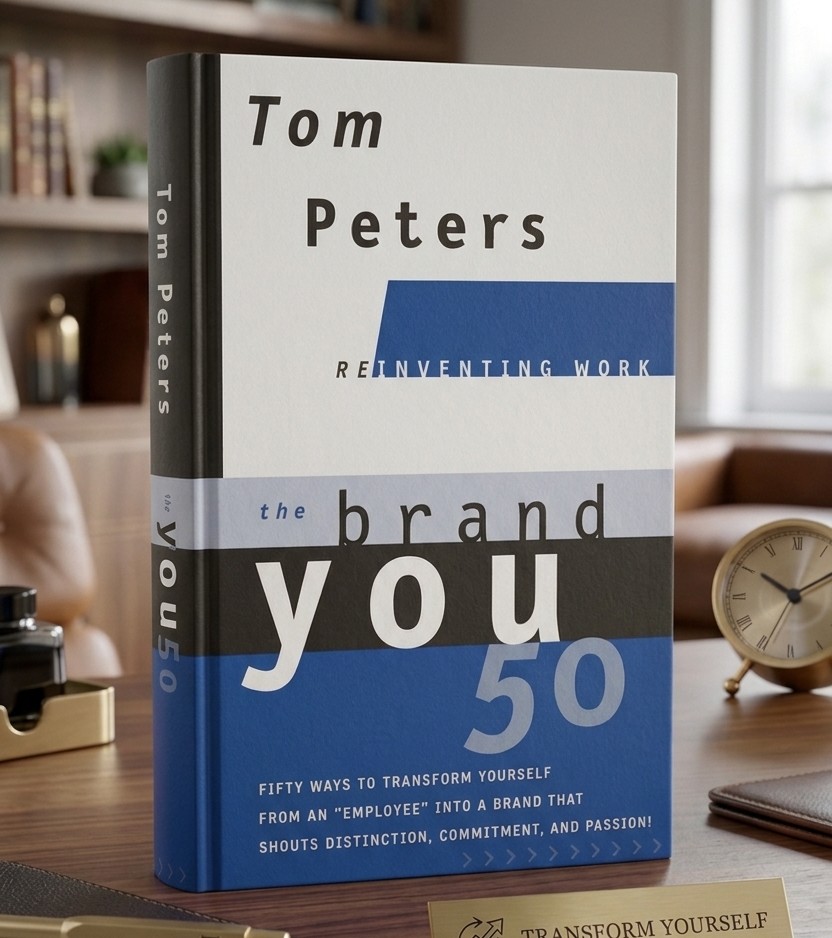
There’s a book that’s marked me above many. Brand You by Tom Peters, published in 1999. In it, Peters made a prediction that sounded almost radical at the time: that the era of the lifelong company employee was ending. That we’d go back to being independent. Own our own brand, our own company, working on independent projects rather than giving our whole career to one organisation.
I read it in the 2010’s as a good employee. Fascinated but genuinely scared.
Fast forward to today, and I’m scared of the opposite. Not of being my own brand. Of being employed.
Why employment is no longer the safe option
Because I’ve been laid off so many times that it’s left a mark. Not just financially. Psychologically. There’s a particular kind of trauma that comes from repeatedly building your life around a job, only to have the rug pulled out. You start to realise that the stability you thought you were trading your freedom for was never really yours to keep.
But here’s what I don’t want: for that to be your story too. And if it is, this stops now.
Peters wasn’t just right. He was early. Everything he described has accelerated beyond what even he probably imagined. AI means that a single person today can operate with the leverage of a small company. Tools that used to be prohibitively expensive and took three years of development can now be built in weeks. The solo creator with the right idea, the right voice, and the right positioning can reach the right people without a marketing department, a budget, or a boardroom sign-off.
The opportunity has never been more real. But neither has the trap.
The biggest mistake creative solopreneurs make, and how to avoid it
No matter how many tools you have, if you don’t know what to build, it’s all useless. I’ve been guilty of the classic mistake: build it and they will come. Spend weeks, sometimes months, constructing something I was convinced the world needed, only to hear crickets on the other side.
That approach works if you’re already known, with a captive audience. And honestly, even then it’s not guaranteed.
What actually works is simpler and harder at the same time: build what people already want. Better yet, find out what they want before you build anything at all.
I go over another way of operating in the last post.
How to validate your creative idea while still employed
This is especially for you if you’re still employed and building on the side, holding down the day job with one hand while quietly constructing something of your own with the other.
The question isn’t whether your idea is good. The question is whether you can find out if others are moved by it too, without risking the financial stability that lets you sleep at night.
The answer is yes, you can. And you don’t need to quit anything to find out.
What you need is honest feedback from the right people. Not a polite nod from friends who don’t want to burst your bubble, and not a generic AI response either.
Why I’m building a community around this
I would have saved myself a lot of energy and heartache if I had a community like this 10 years ago. No point crying over what could have been. All we have is the present so I’m now putting together a small, intentional community of creatives, makers, programmers, designers, writers and builders. A space to test ideas safely before committing to them fully.
I’m calling it The Creative Lab.
Not a course. Not a programme. A room full of people who are serious about building something real without blowing up their lives to do it.
If you’re sitting on an idea, unsure whether it’s worth pursuing, and looking for a structured way to find out, this is being built for you.
If that sounds like where you need to be, join the waiting list


Reflect, Redefine, Rise!
R.
Leave a Reply